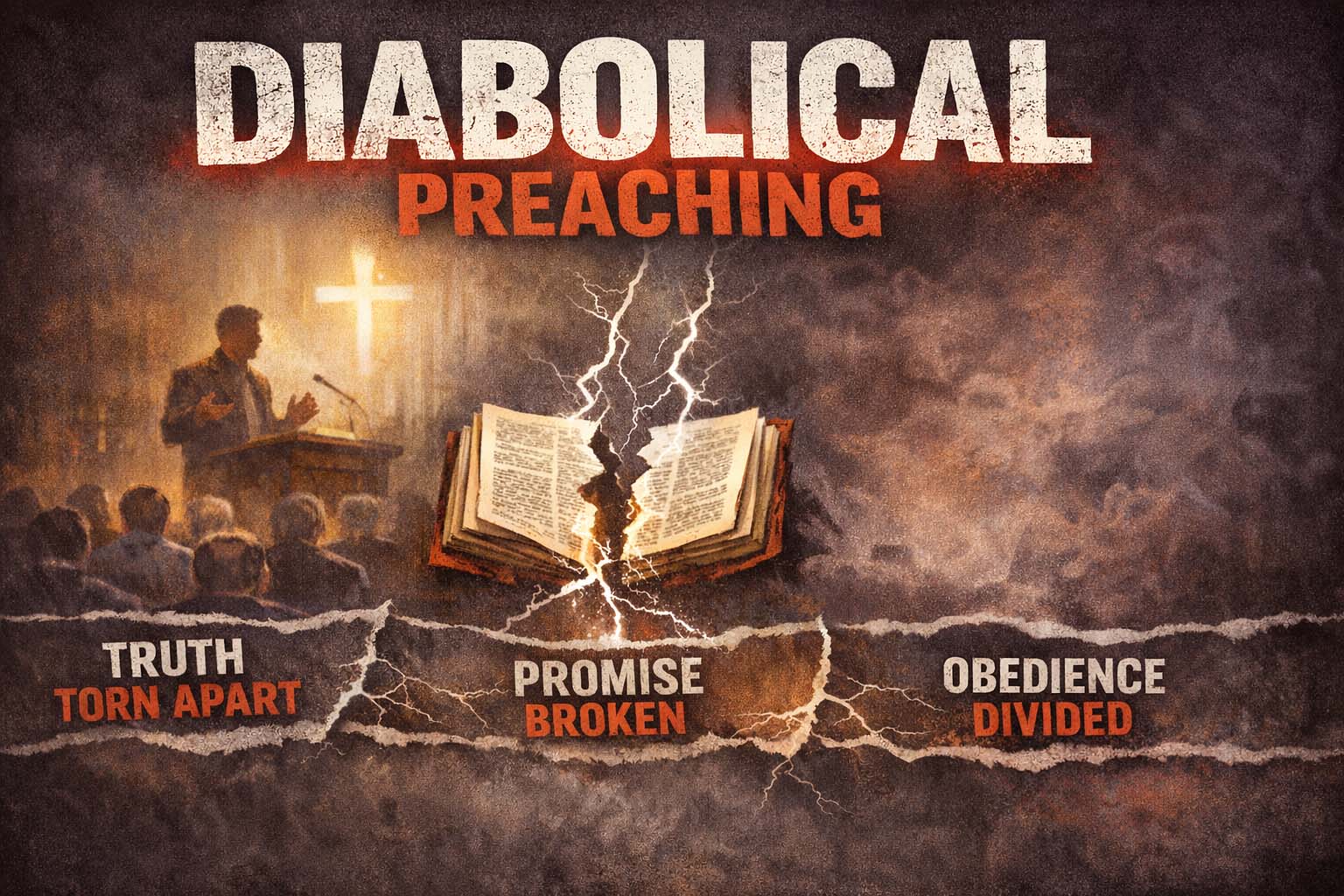
Diabolical Preaching at Woori Yallock Presbyterian Church.
If I were to describe the preaching at Woori Yallock Presbyterian Church as "diabolical", many are likely to misunderstand me.
Many will most likely underestimate what I truly
mean, as if I was simply saying, the preaching at Woori Yallock Presbyterian
Church was really bad. True as that may be, that is not what I mean.
A proper understanding of diabolical preaching must begin where Scripture itself begins, not with tone or intent, but with division.
The Greek verb διαβάλλω means to throw across, to separate, to set at odds, to accuse by fragmentation. Although the first person singular διαβάλλω does not appear in Scripture, Luke 16:1 uses a third person singular form, διεβλήθη to describe an accusation brought against a certain rich man's steward.
However, its noun form διάβολος, does, repeatedly appear in Scripture. In fact, 38 times in the New Testament, and it is nearly always translated as “devil”. The devil, in Scripture, is not named first as a monster, a tyrant, or even a tempter, but as the divider. The devil is named in Scripture not by his appearance or power, but by his work: he deceives in order to divide, and accuses to keep what God has joined apart. He is the one who pulls apart what God has joined: word from meaning, promise from obedience, truth from life. To call something diabolical, therefore, is not to indulge in rhetoric. It is to identify a pattern of division that mirrors the devil’s work.
That definition provides a disturbingly precise lens through which to view the preaching at Woori Yallock Presbyterian Church. The sermons are not diabolical because they are overtly heretical, aggressive, or irreverent (although sometimes they are). They are diabolical because they divide covenantal realities that Scripture binds together. Christ is spoken of, but severed from covenantal obligation. Grace is announced, but detached from judgment. Application is urged, but remains untethered from doctrine. Texts are handled episodically, stripped of their redemptive-historical weight, and pressed into the service of immediate relevance. What God has sworn across generations is reduced to what the listener may find useful today.
This is division masquerading as pastoral sensitivity. The congregation is encouraged to reflect, consider, and respond, but not to tremble, submit, or repent. The law is softened into suggestion. The fear of God becomes emotional tone management. Doctrine survives only as atmosphere, in name only, never as structure. Over time, the hearer is trained to experience sermons as events rather than as covenantal declarations. The Word no longer governs; it assists. This is precisely how the devil works in Scripture: not by erasing truth, but by loosening it until it no longer binds.
These dynamics explain why the pastor there can quote freely from men such as the Pope, Scott Adams, George Orwell, and Jordan Peterson as though they occupied the same theological register. Truth is no longer received as something bound to the attributes of God, as something He has revealed about Himself, but as something sifted through personal discernment and pragmatic appeal.
Scripture is unambiguous about this pattern. Jesus describes the devil as “a liar and a murderer from the beginning” because falsehood always kills by separating creatures from the life-giving Word. Paul warns that Satan disguises himself as an angel of light, meaning his work often appears helpful, reasonable, and humane. John says the devil sins “from the beginning” because he refuses to abide in the truth. In each case, the mark is the same: truth is present, but dislocated.
What Scripture calls “of the devil” is not simply wickedness, but teaching that unfastens God’s Word from its authority and force. When preaching consistently divides promise from covenant, assurance from obedience, and Christ from judgment, it participates in that ancient work of scattering. However gentle the voice, however orthodox the vocabulary, such preaching bears the family resemblance Scripture itself names without hesitation: it is, in the fullest biblical sense of the word, diabolical.