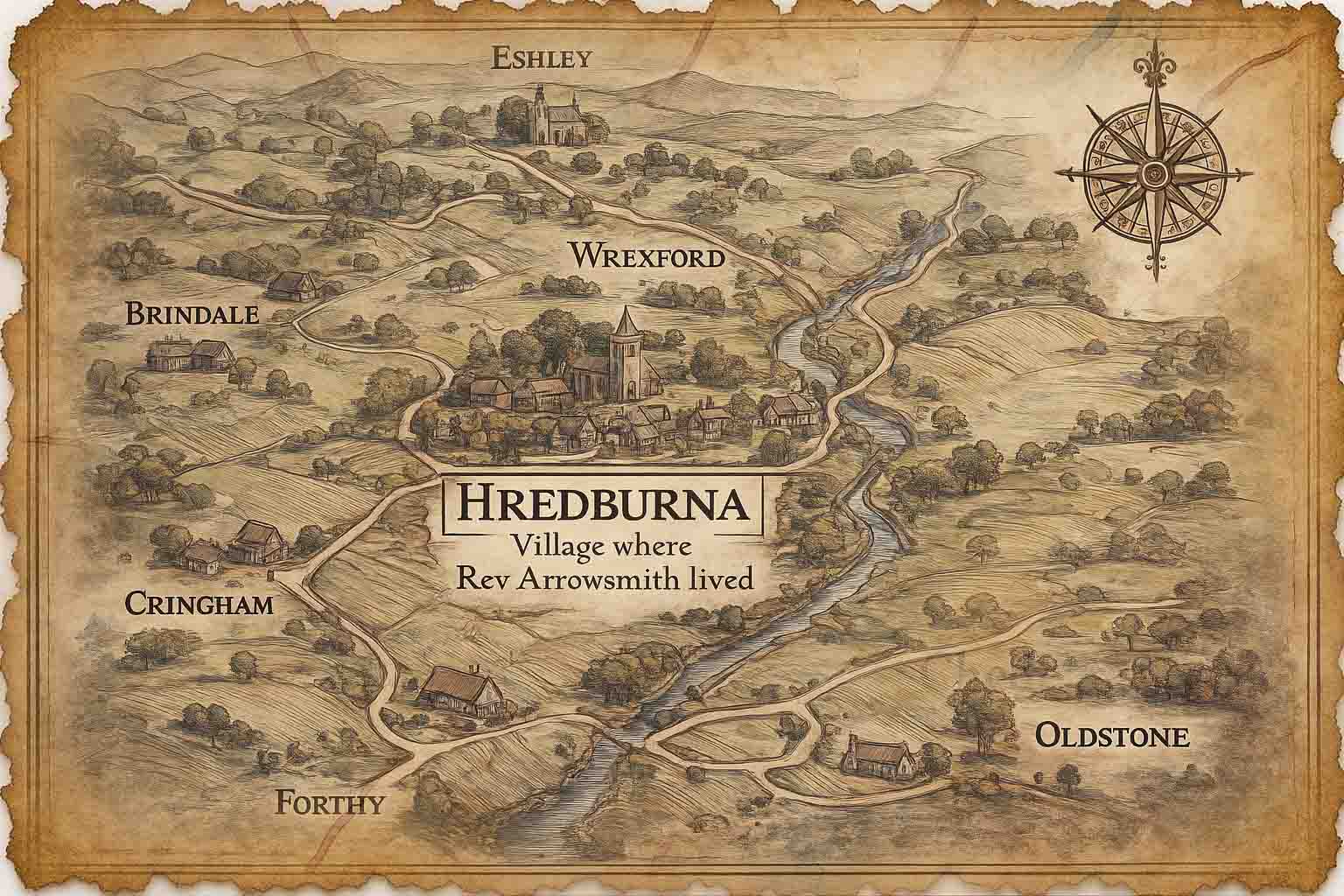
Hredburna, old Gaelic for marshy
creek, began as a modest creek side hamlet first settled by early woodcutters in 1187 who
prized the marshy banks for their workable timber. Over time, traders traveling
between Forthy and Wrexford found it a convenient midway rest. The local Inn,
The Fat Goose, provided rooms for travellers. The village slowly grew around a
small timber chapel. By the mid-seventeenth century it had gained modest renown
for its dye-workers, who used the river’s mineral-rich reeds to produce a
distinctive green tint. Hredburna remained a quiet rural parish until the
ministry of Rev. Anthony Arrowsmith. His sermons, more admired by himself than
by his hearers, somehow became the village’s most infamous curiosity.
The bubonic plague reached
Hredburna in 1666, carried along the trading route from Stopford only weeks
after outbreaks were reported in the larger towns. The village, with its marshy
riverbanks and close-packed cottages, proved tragically susceptible. Within two
months, nearly three-quarters of its inhabitants had died or fled. Rev.
Arrowsmith, certain he alone was divinely preserved for “extraordinary
usefulness,” refused all precautions, held daily gatherings, and
unintentionally hastened the contagion’s spread. By winter, Hredburna was
deserted and slowly became lost to time.