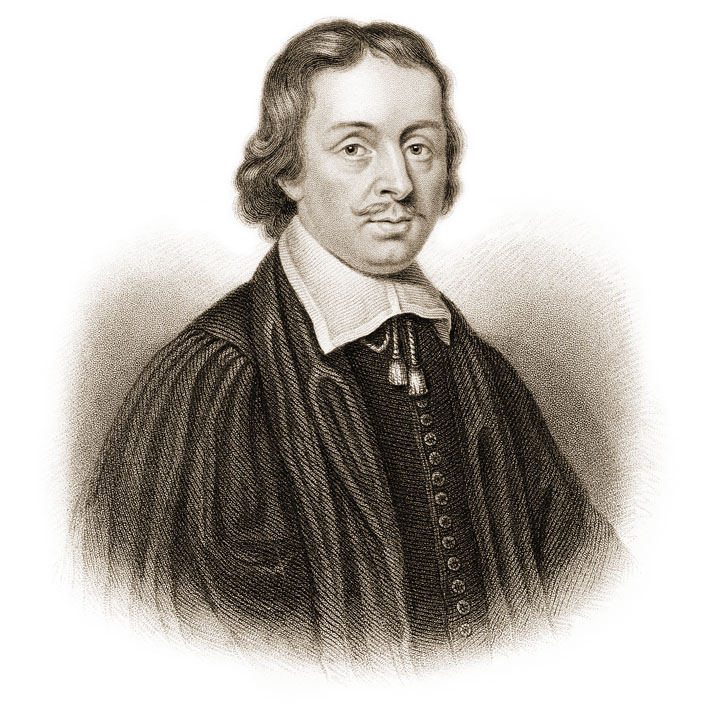
From Robert Leighton's Meditations on Psalm 4.
After yesterday’s sermon on Psalm 4 given by a semi retired Baptist minister, I came home excited and eager to hear more from this particular Psalm. One of the works I turned to was Robert Leighton’s meditations on Psalm 4. My particular copy of Leighton’s works was printed in 1860 and is in a dilapidated state, requiring careful handling. But, Oh, what a joy his meditations are.
I
am not going to reproduce the whole meditation here as it runs into several
pages of very small print, but just reproduce what he writes upon Ps 4:2.
But first, who was
Robert Leighton? Robert Leighton (1611–1684) was an ordained Scottish Presbyterian
minister who, according to Wikipedia “was "noted for his Christian piety,
his humility and gentleness, and his devotion to his calling". The
Wikipedia entry goes on to say that “Although an ordained Presbyterian
minister, in 1661 Leighton allowed himself to be appointed Bishop by King
Charles II…[before he]… in 1670, hesitantly
agreed to accept appointment as Archbishop of Glasgow.”
Leighton begins v2 with
a translation of 4:2b which reads: “O ye sons of men, how long will ye love
vanity and lies?” He then writes:
“For indeed, what are
all these things which we foolish mortals pursue, with such contention and
ardour of spirit, but as an ancient express it, “Trifles that are but like the
shadow of smoke?” But we are to speak of this hereafter, in the mean time let
us attend to the words before us.”
[The, going back to the beginning of the verse, Leighton writes:]
How long will ye turn my glory into shame? “The things which are the brightest ornaments of human nature, and which alone constitute its very glory are holiness, piety, and faith; and these are treated as if they were the most despicable and ignominious things in the whole world. Among Christians, or those who are called by the name, it is the greatest of all scandals to be a Christian indeed. We have long since lost the true names of things; candid simplicity of manners is despised as rusticity; lively religion is called the delirious dream of superstitious notions; and gentleness, dullness and stupidity: while pride has usurped the name of magnanimity, craft that of wisdom.”
“Thus, we turn true glory into shame, and shame into glory; and because few are able to discern what tends to their eternal happiness, they squander away the whole day of this short life in pursuing and catching at the false and fictitious forms of it; yea they seek a lie, lying in vanity.”
Commenting on those who pursue wealth or luxury, Leighton writes: “Into how foul a gulf do they throw what they have laboured so eagerly to gain!”. Here Leighton is most likely continuing his reference to nominal Christians.
Leighton elaborates more on this point before writing:
“And as for pleasure, who is so senseless as not to know how deceitful a lie it proves at last? It drives men into a weak frenzy, to run after the most trifling objects of pursuit, which fly from them like bees, who, if they are taken, yield but a drop of honey, and repay with a sting.; a sting which, alas! Reaches the very heart.”
Robert Leighton’s works are not widely known. In his will, he gave instruction that all his personal papers and manuscripts be destroyed, though this never took place. I was fortunate and was given my copy by a friend who wanted it to go to someone who would appreciate it. That was 12 months ago. It is only today, after a richly edifying sermon on Psalm 4 yesterday, then a read from “The PSALMS as Christian Worship: A Historical Commentary” by Bruce K. Waltke and James M. Houston that I have finally opened Leighton’s works. Truly, God’s words are sweeter than honey.