Psalm 130: The Redemption of Fear
I came across a sermon
on Psalm 130 recently that did not have that ring of authenticity about it. The
sermon preached the psalm as therapy. Rather than being preached about a
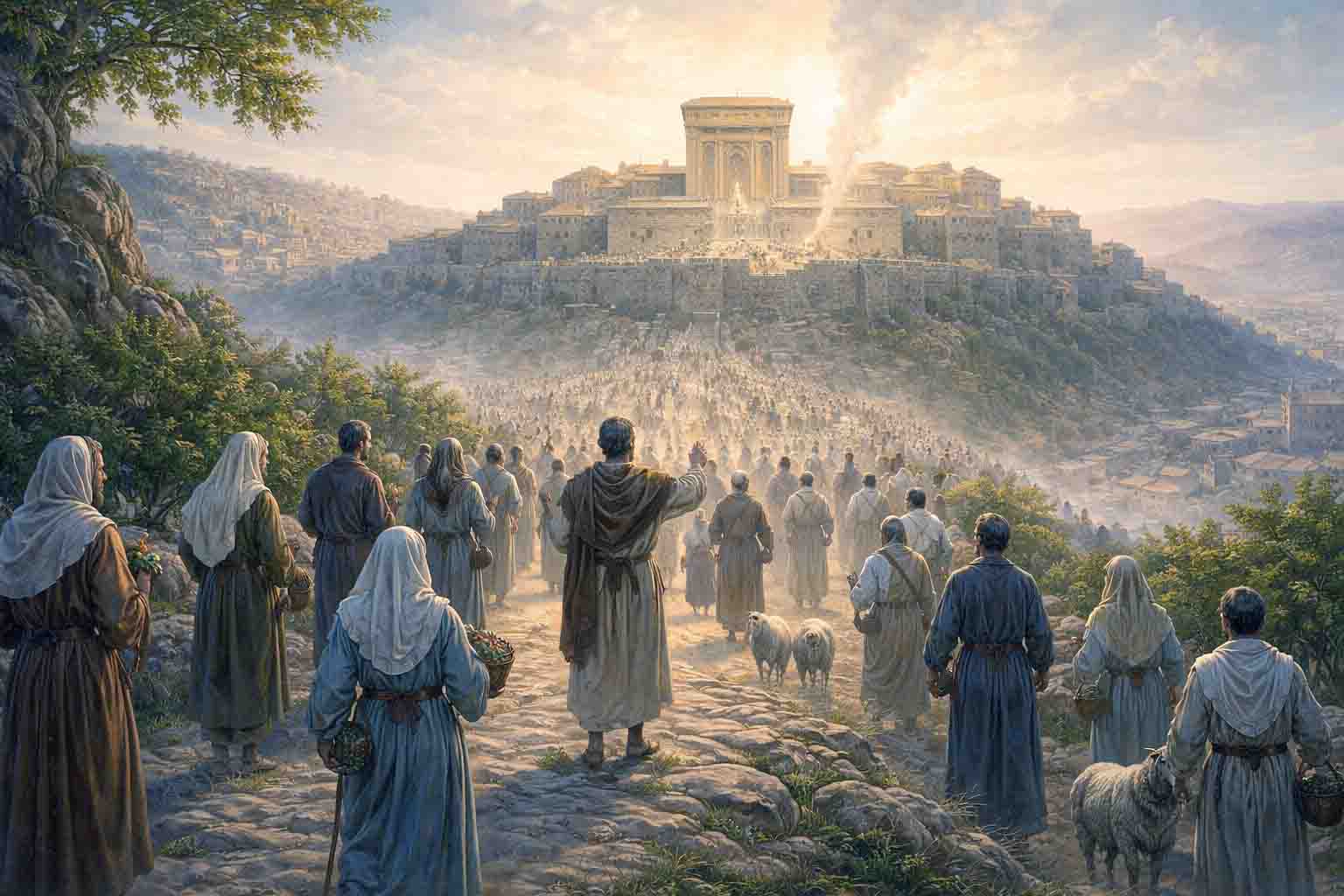
pilgrim ascending to worship, the sermon reflected upon managing personal guilt
and emotional reassurance. The Lord’s name had been ignored, and fear of the
Lord had been flattened to an “awe”, as though we were gawking at Mt Fuji. It
was a sermon focusing upon the individual’s emotional needs, rather than a
revelation of our Lord.
Now, the following is not a full exposition of the Psalm, or a critique of the failed sermon mentioned above. Rather, what I propose to do here is to present the Psalm in terms of redeeming our fear, v4, not changing it to something else. Psalm 130 assumes we were made to fear God.
In Deut 10: 12-13, Moses commanded Israel to fear God: “And now, Israel, what does the LORD your God require of you, but to fear the LORD your God, to walk in all his ways, to love him, to serve the LORD your God with all your heart and with all your soul, and to keep the commandments and statutes of the LORD…”.
Why was Israel commanded to fear God? Without fear of the Lord, we will never walk and serve as He requires from His people. The Fall caused humanity to fear false gods and live in disobedience and depravity just as the nations surrounding Israel lived.
And so, what do we mean by fear? We mean that what we fear is what we worship. Isaiah 8:13 puts it simply for us: “The LORD Almighty is the one you are to regard as holy, he is the one you are to fear, he is the one you are to dread.” Scripture consistently teaches that fear is the functional core of worship. We see this negatively in Revelation 13:4: “People worshiped the dragon because he had given authority to the beast, and they also worshiped the beast and asked, “Who is like the beast? Who can wage war against it?” By fearing the beast, the people were worshiping the beast. The redemption of our fear is an essential work the Holy Spirit performs within us as we learn to fear the One True God, and not the false gods of the world.
So, let’s turn now to Psalm 130, and see how it addresses our need for true fear of God.
The psalm begins: “Out of the depths I cry to you, O Lord.” These depths are not explained at first and thus it is a mistake to assume they refer to sins committed. After all, the singer here is ascending to the temple for corporate worship with other worshippers, not to make sacrifice for personal sin. The depths are clarified as the psalm unfolds, but first we must stop and see who it is the psalmist is crying out to. He is not crying out to a “god” or “power”, rather he is crying out to YHWH. Translated in capital letters as LORD, YHWH is the covenant name of our Lord. This is the name God used with Abram in Gen 12 when He most clearly made a covenant promise of salvation for the nations through Abram’s seed. So when the Psalmist cries “O LORD” he is responding by faith to the promises God has made to his people. This is grace received and acted upon in worship; not the words of someone seeking permission to worship. By grace, permission has been already given to him. He continues using LORD in verses 3, 5, and twice in v7. Our psalmist knows whom he worships.
However, in verse 2 the psalmist uses a different name for God, which is translated in our English bibles as “Lord”. The Hebrew word he uses is Adonai and this name means Sovereign One. There is an acknowledgment here that the covenant LORD is also the sovereign Lord God of all creation. Knowing YHWH, the covenant LORD does not lead the psalmist to act presumptuously, rather, he acknowledges the absolute total authority of the Lord. Covenant promises to God’s people do not diminish God’s authority, and here we see that the promise allows him to ask for mercy.
But is this mercy for? Is it for sins he has committed and feeling weighed down by? No, it’s not. Our English translations refer to “iniquities” in v3 and this is used here to signal covenantal unfitness and guilt before God, not a catalogue of personal failures. In modern Reformed language we would say the Psalmist is referring to original sin. It is our natural condition that we are born with as a consequence of the Fall and Adam’s disobedience. It is the very condition that means we must be born again.
Looking at v3, “If you, LORD, kept a record of sins, Lord, who could stand?”, we should feel the tension. The LORD who is my friend is also the Lord God of creation who has no sin, no original sin. How can I, a man born in corruption, worship a holy God? Adam and Eve hid with fear from the Lord God when they sinned, and this is what the Psalmist recognises about himself.
The tension of the psalm turns though in verse 4, “But there is forgiveness with You, That You may be feared”. Rather than fear his sinful condition as a man, the psalmist praises God for forgiveness. But look closely at the verse. Fear is not redefined and abolished. Remembering the close connection between fear and worship we discussed above, what the psalmist is saying here is that there is forgiveness with God so that he can be worshiped. This is not “awe”, this is redeemed fear that enables true worship. The covenant mercies inherently acted upon by calling upon YHWH, O LORD, in v1 has led to a re-ordered fear that now recognises his dependence, divine authority, and has his life orientated Godward.
We see the turn around that this reordered fear has produced in v5. Rather than fearing his sinfulness and hiding from God, he writes: “I wait for the LORD, my soul waits, And in His word I do hope.” What a turn-around! This is not a passive waiting here, but rather it is the obedient trust in the LORD’S covenantal love. Verse six confirms this. He is now alert submitted and expectant of the LORD’S provisions enabling true worship.
What wonderful joy now breaks upon him in verse 7. “O Israel, hope in the LORD; For with the LORD there is mercy, And with Him is abundant redemption.” Who did the surrounding nations fear (or worship) when seeking blessings? The Baals, Molech, Asherah. Who was Israel so prone to worship? The Baals, Molech and Asherah! But the psalmist here is arresting Israel. Forget everything these false gods promise. You no longer need to fear your sin. There is forgiveness with the LORD, and the Lord God will provide all that you need. This is the One to hope in. The word mercy in v7 is the translation for the Hebrew word hesed. Hesed refers to guaranteed covenant love that includes forgiveness enabling fear that leads to true worship.
The Psalm ends with certainty. Verse 8: “And He shall redeem Israel From all his iniquities”. Redemption is the LORD’S work, not Israel’s works, not the psalmist’s pleading from a troubled conscience. Fear has become focused on the true God, hope in his goodness is leant upon and he is enabled to ascend to worship because of covenant mercy.
Psalm 130 teaches us that God does not heal our fears by removing them. Nor does he redefine our fears as some kind of new “awe” of God. God does not seek our admiration. He forgives our iniquities so that once again, like Adam before the Fall, mankind can fear God with obedient living. Forgiveness redeems fear, and redeemed fear leads us into holy fellowship with the Lord God of Creation.