The Presbyterian Church of Victoria and the Work of Revitalization.
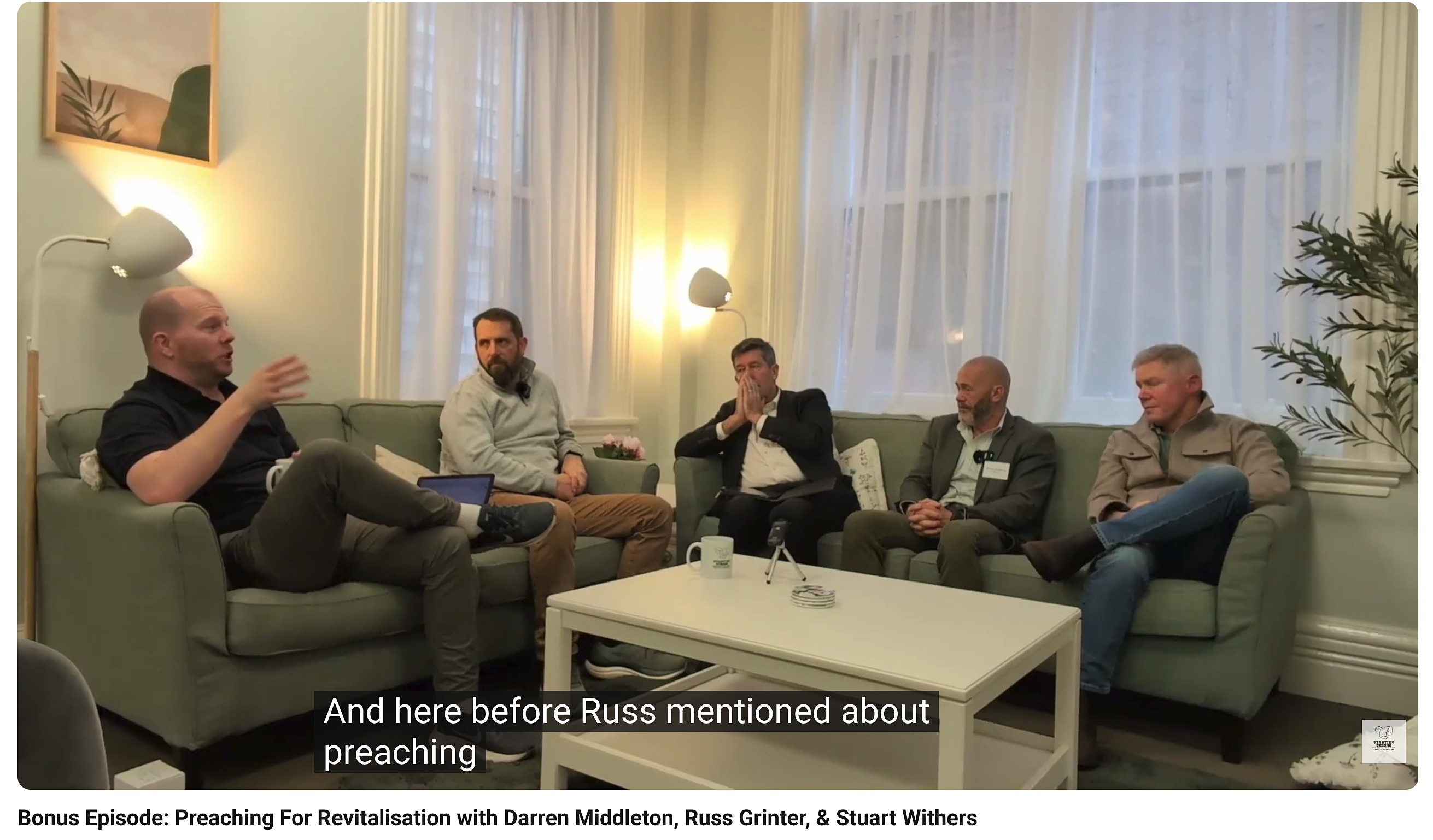
“Starting Strong” is a commendable and unusually useful YouTube channel for those beginning pastoral ministry. Its stated aim is modest—helping preachers move from seminary to the regular demands of Sunday preaching—and this discussion shows that it takes the task with appropriate seriousness. Before looking at the latest video, a little about the channel. It was started just over a year ago by two ministers concerned with the pressures men freshly out of College and into ministry can face. More of their videos are at Starting Strong.
During the General Assembly of the Presbyterian Church of Victoria, an opportunity was provided whereby three men associated with revitalizing the ministry of the PCV could be interviewed. The panel consisted of a past, present, and future Ministry Development officer.
Listening to the video, it soon becomes apparent that this “revitalization panel” offers experience rather than easy formulas. Its speakers acknowledge the realities of numerical decline, loss of mature leadership, conflict, discouragement, mission drift, and congregational histories that cannot simply be ignored. In that setting, they rightly resist the idea that revitalization is chiefly a matter of better structures, stronger programs, or more sophisticated strategy.
Darren Middleton’s, the incoming Ministry Development officer, central observation is that preaching must be near the centre of revitalization because God ordinarily renews his church through the means of grace: the Word, prayer, sacraments, and fellowship. The public reading and faithful proclamation of Scripture renew the mind through the Spirit and, equally importantly, “recalibrate the affections.” A church in need of renewal does not merely require new information or improved organisation; it needs to love Christ afresh, desire his kingdom, and be formed into a people of witness, discipleship, and holiness.
Middleton also observes that Presbyterian ministers will commonly find themselves involved in revitalization, since this is often “the nature of our denomination.” Such work may involve inherited conflict, unresolved history, weakened leadership, or competing theological and cultural identities. Therefore preaching in this context needs courage. It must not only state what faithfulness is, but at times identify what it is not. Yet Middleton carefully qualifies this: preaching should be pointed without becoming combative, warm without becoming evasive, and personally humble without targeting particular individuals. The preacher must let the Word of God do its searching and healing work.
Amen! Absolutely. However here, in this essay and against the background of the recognized revitalization necessity across the denomination, I want to ask “What happens when the sermon sounds Reformed, but in essence, it’s message is not the message of the passage preached?
A sermon preached recently on Romans 8:9-30 by Rev Shady Mehanni at Hamilton Presbyterian Church is a strong example of many of the qualities advocated in this discussion. It is plainly Scripture-centred. The preacher works through Romans 8’s teaching on resurrection, adoption, creation’s groaning, the Spirit’s intercession, and the believer’s future glory. The sermon’s hope is neither vague optimism nor mere exhortation to human resilience. It is rooted in the death and resurrection of Christ: “Jesus died. Jesus has been raised,” and the Spirit who raised Christ now dwells in his people. That is the kind of gospel-centred preaching the panel commends.
The sermon also addresses both mind and heart. It explains the Christian’s sure hope of bodily resurrection and adoption, while seeking to cultivate a deeper longing for communion with God and the final renewal of all things. Its treatment of suffering is pastorally realistic: believers groan amid sickness, grief, disappointment, broken relationships, and decay. But these groans are not interpreted as proof of divine abandonment; they become reminders that this broken and fallen world is not the believer’s final home.
Importantly, the sermon provides memorable and concrete application. Hearers are urged to turn each experience of pain or disappointment into prayer: “Father, by your Spirit, deepen my longing for home with you.” This is precisely the sort of application Middleton values: not an abstract principle left hanging in the air, but a clear summons to respond in faith. The sermon is also warm, hopeful, Christ-centred, and attentive to the whole congregation as a community that reminds one another of true hope.
As preaching designed to sustain faith, deepen hope, and shape Christian affections through the Word of God, it ticks many of the principal boxes the *Starting Strong* panel identifies. So lets examine the sermon itself.
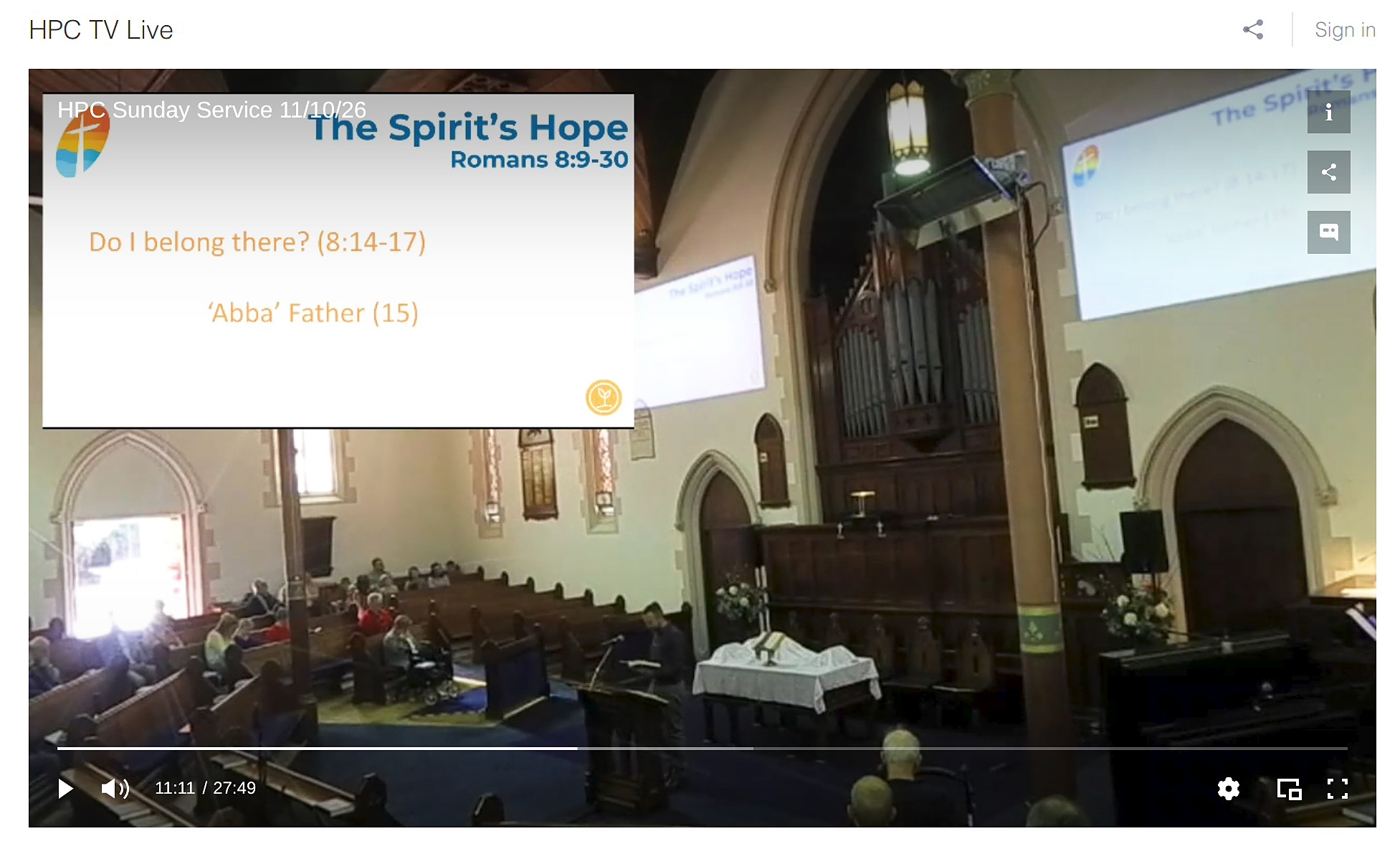
The Spirit's Hope and the Gospel Logic of Romans 8
First, it must be acknowledged that Rev Mehanni’s sermon on Romans 8 offers genuine pastoral warmth. It speaks sympathetically of bereavement, physical weakness, disappointed hopes, damaged relationships, mortality, and the longing for a lasting home. It rightly affirms that Christ’s resurrection guarantees the bodily resurrection of his people, that Christians are adopted as God’s children, that creation groans beneath corruption, and that the Holy Spirit helps believers in their weakness. These are not peripheral themes. They belong to the apostolic consolation of Romans 8.
The sermon’s difficulty is not that it speaks of suffering too seriously. Its difficulty is that it does not allow suffering to be interpreted within Paul’s full argument concerning sin, condemnation, justification, remaining corruption, and final glorification. The sermon’s dominant account of the human predicament is “brokenness.” Human beings are portrayed as wounded, weary, displaced, and longing for home in a world that does not work as it should.
That description contains truth, but it is not enough. It does not reach the depth of Paul’s diagnosis. The fundamental human problem is not merely that we inhabit a broken world. It is that we are guilty sinners before a holy God, dead in sin, under condemnation apart from Christ, and still troubled by the corruption that remains within us even after regeneration.
The word “brokenness” can be pastorally useful when it names the misery caused by sin and the painful consequences of the fall. Yet it becomes spiritually evasive when it replaces the biblical language of sin, guilt, rebellion, judgment, wrath, and the need for reconciliation. It can make the human condition sound primarily tragic rather than culpable. It can present man principally as a victim of suffering rather than as a rebel against his Maker. In doing so, it may awaken sympathy while failing to awaken conscience.
The Context of Rom 8.
Romans is an exposition of the gospel as the revelation of the righteousness of God. Paul begins by establishing that the wrath of God is revealed against human ungodliness and unrighteousness. Gentile and Jew alike stand guilty. The whole world is accountable to God. “All have sinned and fall short of the glory of God” (Rom. 3:23). This is not merely the announcement that every person has experienced pain or dysfunction. It is the declaration that every person has failed to render God the glory, obedience, gratitude, and worship that he is due.
The Westminster Confession of Faith speaks with biblical clarity at this point. Through Adam’s fall, mankind lost “original righteousness and communion with God,” became “dead in sin,” and became wholly defiled in all the faculties and parts of soul and body (WCF VI.2). Adam’s guilt was imputed to his posterity, and the same corrupted nature was conveyed to them (WCF VI.3). This corruption renders human beings “utterly indisposed, disabled, and made opposite to all good, and wholly inclined to all evil” (WCF VI.4).
That doctrine is not an unnecessary preliminary to the gospel. It explains why the gospel is necessary. The human problem is not resolved by encouragement, resolve, community, emotional healing, or the promise that life will one day improve. If we have sinned against God, we need more than a future home. We need forgiveness, reconciliation, righteousness, and deliverance from sin’s reigning power.
To help us here, the WCF therefore says that every sin, both original and actual, “being a transgression of the righteous law of God,” brings guilt upon the sinner and makes him liable to God’s wrath and curse, death, and all spiritual, temporal, and eternal miseries (WCF VI.6). Death is indeed an enemy, as the sermon rightly insists. But death is not an unexplained enemy. It is the wages of sin. The decay of creation, the mortality of the body, and the groaning of the present age must be understood in relation to Adam’s fall and God’s righteous judgment.
Paul’s teaching on justification is therefore central. The gospel he proclaims announces that God justifies sinners: he pardons their sins and accepts them as righteous in his sight, not because of anything wrought in them or done by them, but “by imputing the obedience and satisfaction of Christ unto them,” received by faith alone (WCF XI.1). Romans 8 cannot be understood apart from this gospel. “There is therefore now no condemnation for those who are in Christ Jesus” (Rom. 8:1). The word “therefore” bears the weight of Paul’s preceding argument in Rom 7 and the anguished cry of v24, “What a wretched man I am! Who will rescue me from this body that is subject to death?. The assurance of Romans 8 rests upon the righteousness of Christ received by faith, not upon the believer’s feelings, perseverance, capacity for hope, or ability to interpret suffering positively.
The Purpose of Romans 8:9–30
Romans 8:9–30 describes the life of those who have been justified in Christ and indwelt by the Holy Spirit. Its central concern is not simply that Christians will eventually reach heaven. It is that God, having dealt decisively with their condemnation in Christ, will bring them through the conflict, weakness, suffering, and groaning of the present age into the glory he has appointed for them.
Paul’s contrast in Romans 8:9 is between those who are “in the flesh” and those who are “in the Spirit.” To be in the flesh is not merely to have a weak body or a painful life. It is to remain under sin’s dominion, unable to submit to God and unable to please him. To be in the Spirit is to belong to Christ. The Spirit is the Spirit of Christ, given to those whom Christ has redeemed. He is not merely a source of interior encouragement. He is the divine agent who unites sinners to Christ, brings them from spiritual death into life, bears witness to their adoption, enables their warfare against sin, helps them in weakness, and guarantees their resurrection.
The Westminster Confession describes this work in its doctrine of effectual calling. Those whom God has predestined unto life, he effectually calls “out of that state of sin and death” into grace and salvation by Jesus Christ. He enlightens their minds spiritually and savingly, takes away their heart of stone, gives them a heart of flesh, renews their wills, and effectually draws them to Christ (WCF X.1). The Spirit does not merely accompany people who seek God. He creates the faith, repentance, and new obedience that belong to those whom God has brought from death to life.
The sermon’s account of the Spirit is therefore insufficiently developed. It speaks of the Spirit as a helper, comforter, and foretaste of home. Those descriptions are true. But Romans 8 presents the Spirit as the One through whom God applies the saving work of Christ to sinners who were formerly hostile to God. The Spirit’s indwelling is the evidence that the believer belongs to Christ. His presence is covenantal, redemptive, and sanctifying , but most of all here, the Helper needed in the believer’s interior warfare between the desires of the flesh and the desires of the spirit.
The Conflict of Romans 7 and Romans 8
A decisive weakness in the sermon is its failure to relate the groaning of Romans 8 to the conflict of Romans 7. The sermon identifies groaning principally with grief, disease, bereavement, bodily decay, frustrated hopes, and the general pain of life in a fallen world. Paul certainly includes these realities. Creation groans. Believers groan as they await the redemption of their bodies. The Christian’s hope is bodily and cosmic, not merely private or spiritual.
Yet, as I said above, Romans 8 follows the anguish of Romans 7. Paul has described the believer’s continuing struggle with sin: “I do not do the good I want, but the evil I do not want is what I keep on doing” (Rom. 7:19). He cries, “Wretched man that I am! Who will deliver me from this body of death?” (Rom. 7:24). The answer is not self-acceptance, psychological reassurance, or the prospect of eventual escape from suffering. The answer is “Thanks be to God through Jesus Christ our Lord” (Rom. 7:25).
Romans 8 does not leave Romans 7 behind as though the Christian’s remaining sin were irrelevant to assurance. It answers the conflict of Romans 7 by locating believers in Christ, free from condemnation, indwelt by the Spirit, obligated no longer to the flesh, and destined for final glory. The Spirit’s ministry is not only to console believers as they endure a damaged world. It is also to lead them in the mortification of sin. “If by the Spirit you put to death the deeds of the body, you will live” (Rom. 8:13).
What has taken place in this sermon is the transformation of Romans 8 into an encouraging message about hope for heaven without the Scriptural background of spiritual warfare. The struggle it presents is chiefly the struggle of human “brokenness”: grief, disappointment, frailty, sickness, damaged relationships, and death. These are real features of life in a fallen creation, and Paul himself speaks of creation’s groaning and of believers awaiting the redemption of their bodies. But this is not the controlling struggle of Romans 8.
Paul’s concern is the conflict between flesh and Spirit, the continuing presence of sin in the believer, the mortification of the deeds of the body, and the security of those whom God has justified in Christ. Romans 8 is the answer to the cry of Romans 7: “Who will deliver me from this body of death?” Romans 8 begins with “no condemnation” for those in Christ Jesus and ends with the assurance that nothing can separate them from the love of God in Christ. That assurance includes the believer’s suffering, certainly, but it also includes the guilt, accusation, weakness, and remaining sin that have formed the immediate background of Paul’s argument.
The sermon retains some of Romans 8’s language—resurrection, adoption, the Spirit’s help, groaning, and future glory—but it substantially detaches these themes from the apostle’s gospel logic. “Brokenness” replaces sin as the chief explanation of the human predicament. Hope becomes consolation for wounded people rather than the settled confidence of justified sinners who, though still fighting indwelling sin, are united to Christ and will finally be glorified with him. In this sense, the sermon has not simply offered an incomplete reading of Romans 8; it has functionally severed Romans 8 from the argument of Romans.
Before we return to the concerns of the podcast, it should be noted that the only reason Rev Mehanni's sermon has appeared in this essay is because I happened to watch it the same week I watched the Starting Strong podcast.
There have been many more sermons, especially in the New Birth In Exile series that could have been used. This particular Series, The New Birth in Exile examines sermons preached in the Presbyterian Church of Victoria during Easter 2026 looking for clear articulation of the Atonement and the necessity of being born again as a result of the work of Christ at Calvary.
I have also previous written about a sermon titled "Cake or Real" by Rev Oliver Blythe from Rom 5:1-11. Rev Blythe is on the Starting Strong panel conducting the interview this article is concerned with. Although that article was concerned about displacing the Holy Spirit within the first three minutes of a sermon, the whole sermon, which may be viewed at the Surrey Hills Presbyterian Church sermon archive, suffers from a very similar flaw as the one just discussed. The text was preached out of context and divorced from Paul's gospel logic in Romans.
Back to the Panel.
This returns us to the question raised by the Starting Strong Podcast. How will such preaching be revitalized so that the full counsel of God is preached, including the correction of a false doctrine of “brokenness” that appears in many Presbyterian sermons?
True, brokenness is not inherently an unbiblical term when it is used carefully to describe the misery, futility, corruption, and grief that have entered creation through the fall. Yet it is not Scripture’s sufficient or controlling diagnosis of the human condition. The Bible identifies humanity not only as suffering under sin’s consequences, but as guilty, alienated, and rebellious before a holy God, and therefore in need of justification, regeneration, repentance, and reconciliation through Christ. Scripture plainly teaches that creation is subjected to futility, that bodies decay, that death is an enemy, and that believers groan while awaiting the redemption of their bodies (Rom. 8:18–25).
In this limited sense, the language may legitimately describe real misery arising from the fall. The problem comes when brokenness becomes the controlling diagnosis of the human condition. Then sin is softened into hurt, guilt becomes woundedness, repentance becomes therapeutic recovery, and salvation becomes principally the restoration of damaged people rather than the justification, regeneration, sanctification, and final glorification of sinners united to Christ.
That is the correction required here. The sermon must not abandon its tenderness toward sufferers; it must recover the gospel logic of Romans that gives Christian consolation its depth. Paul does not offer Romans 8 to people who are merely weary of life in a damaged world. He offers it to those of us who, having been justified through faith in Christ, are no longer under condemnation (Rom. 8:1). They have been delivered from the dominion of the flesh, indwelt by the Spirit, adopted as God’s children, and called to put to death the deeds of the body by the Spirit (Rom. 8:9–17). Their future glory is secure because God’s saving purpose stretches from foreknowledge and predestination to calling, justification, and glorification (Rom. 8:29–30).
This is not a demand that every sermon on Romans 8 must restate the entire argument of Romans. Nor is it an argument that a sermon on suffering must become harsh, abstract, or unfeeling. The concern is rather that the sermon’s controlling message must arise from the passage, at least within its immediate and canonical context. Where a sermon makes “brokenness” the chief problem, it risks turning the gospel into reassurance for sufferers. Where it presents sin, condemnation, union with Christ, the Spirit’s sanctifying work, and future glory in their proper relation, it brings the deeper consolation of the gospel to sufferers who are also sinners.
This is where the Starting Strong discussion is particularly relevant. Middleton argues that preaching in revitalization must sometimes say not only what faithfulness is, but what it is not. A minister may be tempted to speak generally about hope, grace, belonging, healing, or discipleship, while avoiding the doctrinal assumptions that have weakened the congregation. Yet that avoidance does not heal the church. If the congregation has learned to think of itself chiefly as broken rather than guilty, it needs more than warm language about its true home. It needs the Word of God to expose the inadequacy of that functional gospel and to lead it to Christ.
The correction need not be personal, polemical, or constantly negative. As Middleton says, the preacher should not use the pulpit to aim at individuals. But he must also not be so anxious to appear gentle that he avoids the sharpness of Scripture. He should patiently teach the church what Scripture teaches: that the world is fallen because of sin; that we are not merely victims of its consequences but sinners accountable to God; that Christ bore the curse and condemnation due to his people; that the Spirit gives new life and wages war against remaining sin; and that the final hope is not escape from pain but resurrection life in the renewed creation.
Rev Middleton has his work cut out for him and I do not envy him. Somehow or other the work of revitalization of the Presbyterian Church of Victoria must begin by acknowledging the message preached by his peers falls short. Such recognition requires a deep work of the Spirit in the hearts of men who stand in the tradition of the Reformed faith and yet strangely remain divorced from it.