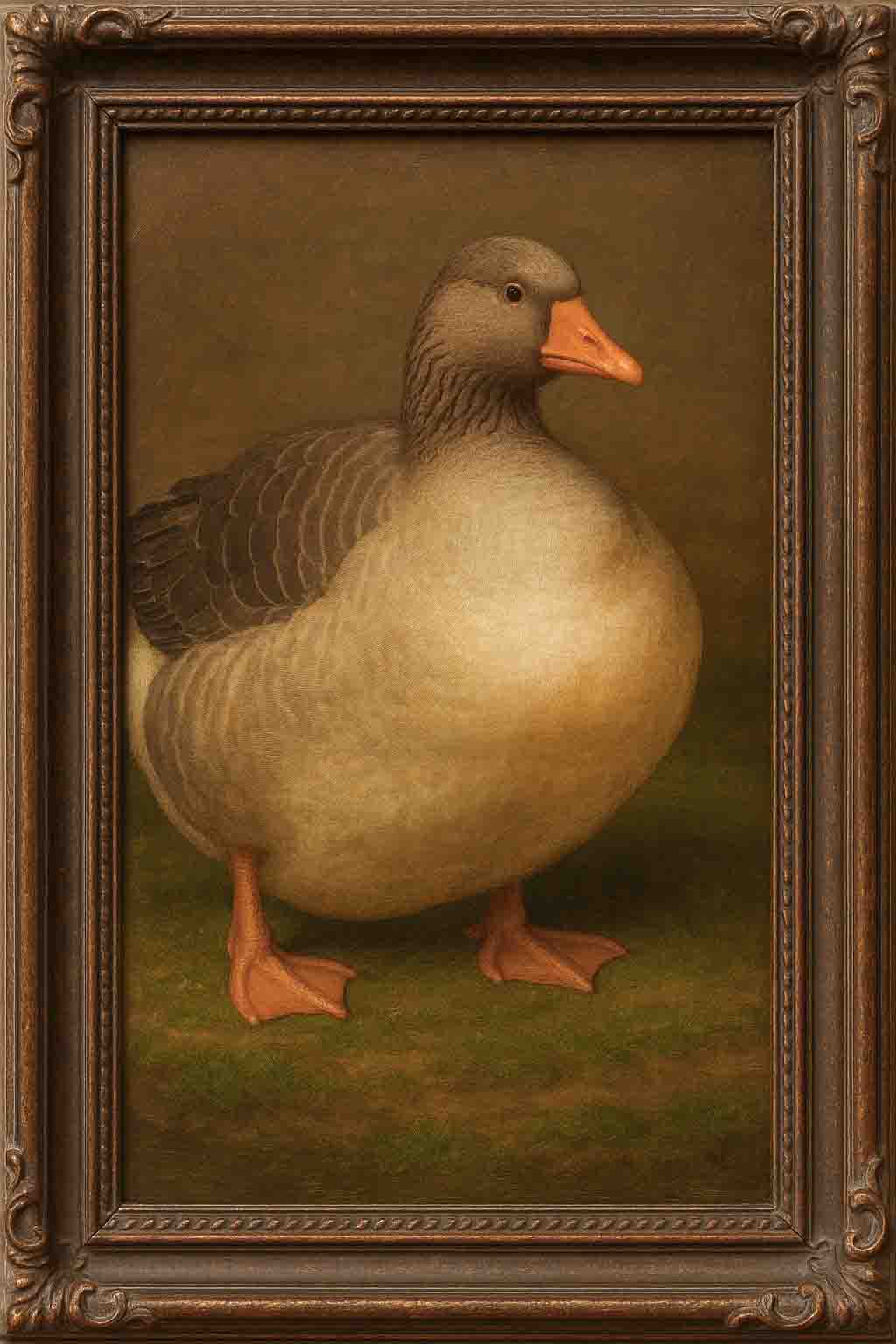
Courtesy: The Pine & Flint Fine Art Gallery, Wherwell, Hampshire
Rev Arrowsmith and The Fat Goose
The Fat Goose had been Hredburna’s inn long before Rev. Arrowsmith arrived, its swinging sign hung beneath mural of a plump, self-satisfied bird waddling triumphantly across a field. The villagers saw nothing more than their well-known emblem of their favourite watering hole and over-generous portions.
Rev Arrowsmith, however, became convinced the sign was an affectionate tribute to him. “Observe the noble carriage,” he told visitors, tapping the painted goose. “A clear likeness, is it not?”
One evening he even attempted a
grand unveiling of the sign “in my honour,” though the sign had hung there for
decades. The villagers, unsure how to correct him without discourtesy, simply
nodded while he posed beneath it with clerical gravitas. Some swore he
practised the goose’s stance in private, lifting his chin and puffing his robes
as though preparing to greet pilgrims.
To this day an old tale persists that Rev Arrowsmith once delivered an entire sermon on “The Dignity of the Goose.”
His text was Psalm 73:7 “Their eyes bulge with fatness; they have more than heart could wish”.
The good Rev insisted that the goose’s girth symbolised “his own spiritual abundance.” The innkeeper, who had painted the sign himself as a joke about his famously overfed poultry, never had the heart to explain.Thus, The Fat Goose became, quite unintentionally, the only public house in England whose patron saint believed himself to be its mascot.
Rev Arrowsmith took up a collection to have this painting done in his memory to hang in his vestry.