Therapeutic Gospel and Its Impact on Preaching
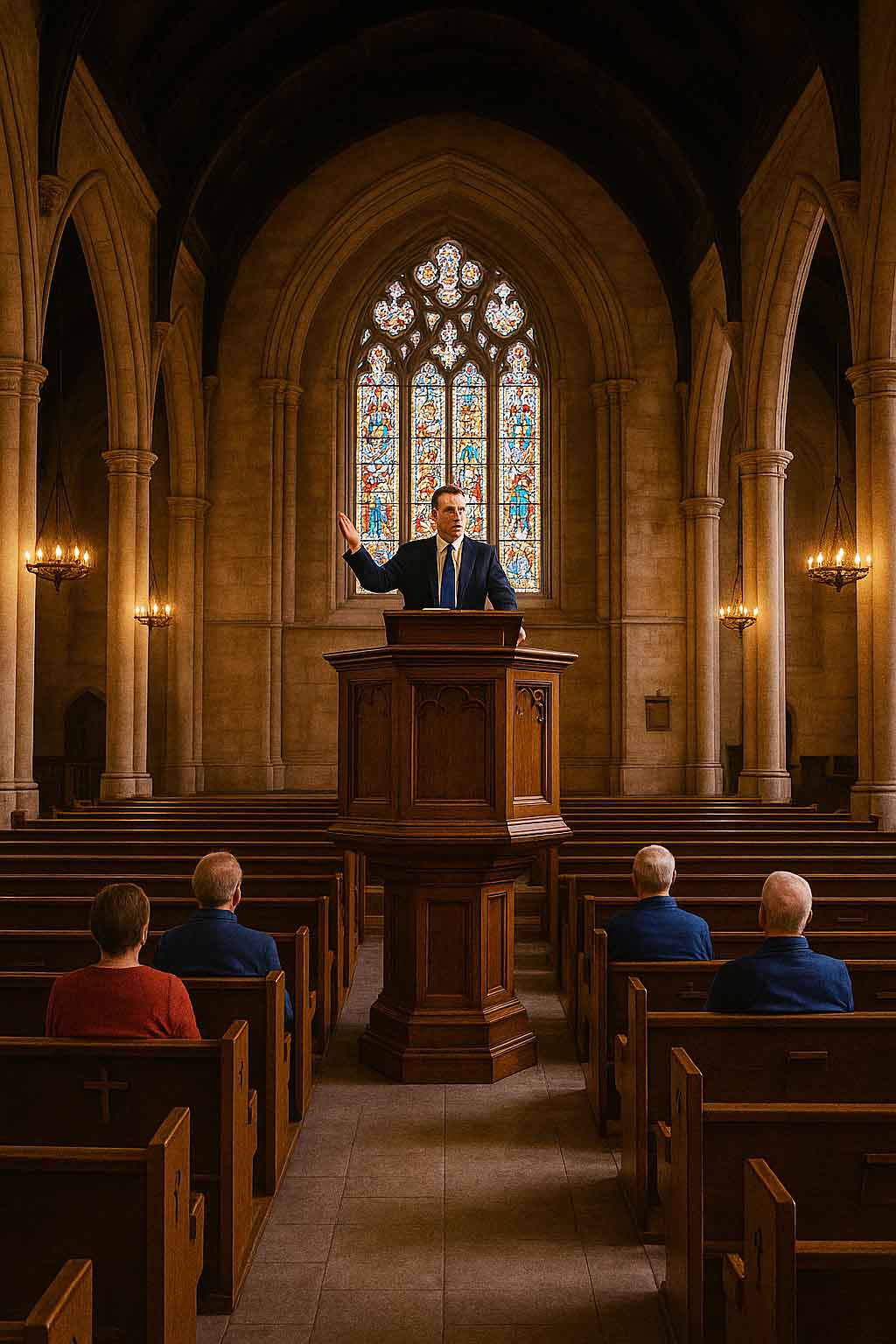
The Resultant Crisis in Reformed
Preaching Seen Through Genesis 3 and Romans
Reformed theology stands
or falls on its doctrine of sin. Scripture declares that humanity has committed
a real act of rebellion against a holy God, that this rebellion brought a real
curse into the world, and that every descendant of Adam shares in both guilt
and corruption. Romans builds its entire argument on this foundation. The
covenantal frame of redemptive history depends on it.
But a rival theology has taken root inside Presbyterian and Reformed denominations . It does not modify Reformed doctrine. It replaces its foundation. It replaces the God who commands with the self that feels. It replaces the vocabulary of guilt, sin, law, curse, wrath, judgment, repentance, and atonement with a vocabulary of shame, trauma, story, boundaries, and healing. The therapeutic ideology is not an innocent helper to pastoral care.
It is a foreign religion, incompatible with covenant
theology and hostile to the gospel Paul preached. Presbyterian preaching, at
least in Victoria, Australia, has become soothing, relational and filled with homespun stories
devoid of doctrine. Our churches are emptying and programs to arrest the decline mis-diagnose the problem.
There is an urgent need for the bold and unapologetic preaching of Scriptures that we are slowly allowing to slip away from us.
Genesis 3 records the
origin of sin: “she took of its fruit and ate, and he ate.” Paul explains its
consequences: “sin came into the world through one man, and death through sin”
(Rom 5:12). Turretin identifies Adam’s action as “voluntary and free, not forced;
it was a defection from God with full consent of the will” (IET 9.7.5). Bavinck
writes: “The Fall is an ethical deed, not a physical or metaphysical event” (RD
3:34). Calvin confirms that Adam’s corruption “became the source of our
depravity” (Institutes II.1.8).
Therapeutic ideology
rejects this entire account. It treats rebellion as woundedness. It treats
guilt as shame. It treats judgment as harm. It treats accountability as
oppression. It therefore denies the foundation of Reformed anthropology and the
foundation of Romans. Objections to such preaching is met with claims “the
Presbyterian church is a broad church”.
To recognise the threat, it must be heard on its own terms.
The Therapeutic Gospel Exposed in Its Own Words
The therapeutic gospel begins with the self. The self is fundamentally good. The self determines its own truth. The self’s pain is the ultimate problem. The self’s emotional equilibrium is the highest good. The self cannot be commanded. It can only be affirmed. The self does not need forgiveness because it is not guilty. It is wounded. It does not need repentance because it has done no wrong. It needs self-acceptance. Salvation is not deliverance from sin but recovery from hurt. God is not Judge but Validator. Christ is not Substitute but Empath. Scripture is not law and promise but resource and comfort. Doctrine must not confront the self. Doctrine must serve the self.
This creed is not a variant of Christianity. It is a replacement.
How Therapeutic Ideology Rewrites Genesis 3
Needless to say, this full-frontal definition is not openly preached. Reformed terms can still be heard, but void of their definition. Rather, the therapeutic gospel fills the doctrinal void. To do this, therapeutic ideology does not reinterpret Genesis 3. It rejects its categories and substitutes its own. Scripture identifies moral transgression. Therapy identifies dysfunction. Scripture speaks of curse. Therapy speaks of harm. Scripture locates alienation in guilt. Therapy locates alienation in shame. In therapeutic thought, nothing is owed to God, nothing is judged by God, and nothing must be repented of before God. The therapeutic gospel focuses on the self without reference to an offended God.
Where God asks Adam, “Have you eaten,” therapy asks, “How did this experience make you feel.” Where Adam evades responsibility, therapy sees victimhood. Where God pronounces curse, therapy perceives cruelty. Where the covenant of works establishes Adam as federal head, therapy rejects any notion of inherited guilt. Bavinck states the principle: “Sin is not weakness but rebellion; it is not a disease but guilt” (RD 3:98). Therapeutic theology contradicts this at its root.
David Wells diagnoses our age: “We are far more exercised about our psychological needs than about our standing before a holy God” (Losing Our Virtue, p. 17). He adds: “God rests too inconsequentially upon the church. His truth is too distant, his grace too ordinary, his judgment too benign” (God in the Wasteland, p. 30). A benign judgment erases the logic of Genesis 3.
Os Guinness traces the same downgrade: “Sin has been sanitized, dumbed down, psychologized” (Time for Truth, p. 55). A psychologized Fall is no Fall. A psychologized sinner needs no Christ who satisfies justice.
The Doctrines That Disappear Under a Therapeutic Framework
A therapeutic sermon overthrows the entire doctrinal architecture of Scripture. It can be recognized by its removal or suppression of the following:
- Sin as guilt
- Total depravity
- Original guilt
- Federal headship
- Covenant of works
- Covenant curse
- Divine law
- Divine wrath
- Judgment and condemnation
- Hell
- Repentance
- The atonement as substitution
- Imputation
- Justification
- Regeneration
- Mortification of sin
- Holiness
- Sanctification as obedience
- The fear of the Lord
- Historicity
Once these doctrines are removed, Reformed theology cannot survive the sermon.
The Words That Vanish From Therapeutic Preaching
Under the therapeutic lens, the following words disappear or are used only as metaphors:
- Sin
- Guilt
- Wrath
- Transgression
- Law
- Judgment
- Curse
- Hell
- Repent
- Flesh
- Idolatry
- Covenant
- Blood
- Propitiation
- Condemnation
These omissions are not accidental. They are required by the therapeutic creed.
The Words That Replace Them
A therapeutic sermon consistently uses:
- Brokenness
- Trauma
- Woundedness
- Story
- Journey
- Shame
- Boundaries
- Healing
- Flourishing
- Emotional safety
- Self-care
- Validation
- Belonging
- Recovery
- Authenticity
- Inner child
These are not neutral terms. They smuggle in a rival anthropology.
A sermon that avoids the first list and centres the second is not a weak sermon. It is a different religion.
How Therapy Dismantles Covenant Theology
Covenant cannot coexist with therapeutic ideology. Covenant presupposes divine authority, divine law, obedience, sanctions, representation, and curse. Therapy rejects all six.
Covenant says God commands. Therapy says God affirms.
Covenant says obedience brings blessing, disobedience brings curse. Therapy calls this oppressive.
Covenant says Adam is federal head. Therapy rejects inherited guilt.
Covenant says Christ mediates by bearing wrath. Therapy denies wrath.
Under a therapeutic worldview, the word “covenant” may be retained for aesthetic effect, but all doctrinal content and explanation is gone. Nothing of Reformed federal theology survives.
Infiltration Through Pastoral Practice: The Australian Context
Reformed and Presbyterian churches in Australia face pastoral pressures that make therapeutic infiltration particularly easy.
- Over 4.3 million Australians (17.5 percent) have a mental or behavioural condition (ABS).
- The Australian Churches Mental Health Survey found that one in three churches are not equipped for counselling or structured pastoral care, yet churches are the most common place people turn in emotional crisis.
- The National Church Life Survey (NCLS) reported that mental health is the second most frequent pastoral need, but more than half of leaders feel ill-equipped.
- A study of Australian churchgoers found that almost half have spoken to clergy about emotional or psychological struggles.
Pastors face enormous pressure to respond to suffering, but without firmness of theological conviction they frequently borrow the frameworks available to them. When therapeutic categories migrate from the counselling room to the pulpit, the sermon changes its centre of gravity. It begins with the self rather than with God. It interprets struggle before it interprets sin. It diagnoses the wound before it diagnoses guilt. It speaks of healing before it speaks of repentance. The therapeutic approach becomes a master, not a tool.
How Romans 1 Is Silenced
Genesis has been under attack since the 19th century. However, preaching Genesis in this recast manner, dismantles the New Testament as well. Romans 1 assumes the reality of Genesis 3. Paul identifies humanity’s core problem as rebellion: “They exchanged the truth about God for a lie” (Rom 1:25). Rebellion brings the revelation of divine wrath: “The wrath of God is revealed from heaven” (Rom 1:18). Suppression of the truth presupposes guilt, hostility, and moral responsibility. Romans 3:23 “for all have sinned and fall short of the glory of God”.
Therapeutic ideology cannot accept this. Such texts must either be avoided or sermons must be filled with illustrations. A replacement of terms must take place: suppression as coping, idolatry as identity, lust as authenticity, wrath as toxicity, and judgment as harm. Once wrath becomes unacceptable, Romans 1 becomes unpreachable. The heart of the apostolic indictment must be removed or softened beyond recognition.
Guinness names the consequence: “When truth dies, there is only power or therapy” (Time for Truth, p. 34). When the truth of Romans 1 dies, the sermons that follow contain no gospel.
How Romans 7 Is Rewritten
Romans 7 presupposes the holiness of the law and the corruption of the flesh. Paul writes: “The law is holy, and the commandment is holy and righteous and good” (Rom 7:12). He describes an internal conflict between the regenerate will and indwelling sin: “I do not do the good I want, but the evil I do not want is what I keep on doing.”
Therapeutic ideology has no category for this.
It must recast Paul’s struggle as shame, not sin.
It must treat the law as trauma, not holiness.
It must interpret the cry “Wretched man that I am” (Rom 7:24) as damaged self-image rather than moral misery.
A therapeutic system cannot explain regeneration, cannot explain sanctification, and cannot explain Paul’s war with the flesh. So these doctrines are avoided. It must rewrite Romans 7 to preserve the innocence of the self.
The Particular Danger to Reformed Identity
Machen warned that Christianity’s rival is not Rome but naturalistic liberalism, which “is not Christianity at all.” The therapeutic gospel functions as a new liberalism within confessional churches. It retains the vocabulary of sin, grace, cross, and covenant but empties each word of content.
When Reformed pulpits adopt therapeutic assumptions, they:
- reduce God to a non-judging companion
- reduce sin to an experience
- reduce Christ to a counsellor
- reduce justification to self-acceptance
- reduce sanctification to emotional management
The result is not a gentler Christianity. It is apostasy in familiar clothing.
The Tragic Irony: Lose God and Lose Ourselves
When the church replaces the Word of God with the doctrines of man, it loses God. The God who speaks, commands, judges, covenants, curses, saves, and sanctifies disappears. He becomes the shadow of the self, projected heavenward.
But the irony is deeper. In losing God, we also lose ourselves.
If Adam is not our covenant head, we lose the meaning of humanity.
If sin is not guilt, we lose God’s revealed truth about our condition.
If Christ is not Substitute, we lose any hope of salvation.
If the law is not holy, outside of ourselves, we lose all moral clarity.
If regeneration is not real, we lose the possibility of a new life.
If Romans is reduced to metaphor, we lose the apostolic gospel.
If Genesis is rewritten by therapy, we lose the history that tells us who we are.
Therapeutic religion promises self-discovery. It delivers self-erasure.
Biblical Christianity reveals God. It restores man.
There’s a further irony too. Our Reformed heritage hinders therapeutic preaching. This tension means we do not preach the therapeutic gospel with the pizzazz of the charismatic denominations. As the die-hard Presbyterians die off, so do our churches.
Reformed denominations must recover the doctrines they have neglected, the language they have abandoned, and the authority they have feared to assert. Only then will the self be recovered in Christ, the second Adam, who obeyed where the first man fell, who bore the curse the covenant demanded, and who alone can give back to a therapeutic generation the identity it has lost.